What to look for in an AI voice translation app for 200+ languages
A practical buyer checklist for multilingual voice translation: speech coverage, translation engines, keyboard access, privacy posture, and real workflow fit.
Read noteBlog
Product updates, language research, SEO/GEO field notes, and operating essays from the team building Vavus Keyboard, Vavus AI, and VClaw.

200+
Languages
3
Products
1 account
3 products
120
Localized posts
Latest
Research-backed guides now publish in multiple languages, with regional search pages and product-specific language workflows.
A practical buyer checklist for multilingual voice translation: speech coverage, translation engines, keyboard access, privacy posture, and real workflow fit.
Read noteReal-time speech translation is a pipeline. Learn how audio becomes text, text becomes translated meaning, and translated text becomes usable speech or messages.
Read noteVavus uses a broad real-time STT path for multilingual use cases, with automatic language detection and wide language coverage.
Read noteStandard translation and AI translation solve different jobs. This guide explains when speed, context, tone, and terminology should drive the choice.
Read noteThe keyboard is where language work actually happens. Vavus Keyboard brings dictation, translation, reverse translation, and history into everyday text fields.
Read noteAn iPhone translation keyboard can reduce copy-paste, improve multilingual messaging, and make voice dictation useful inside the apps people already use.
Read noteDesktop language work needs speed. Hotkeys for dictation, translation, and reverse translation help multilingual users work across applications.
Read noteHealthcare language tools need workflow review, language access awareness, PHI safeguards, audit trails, and clear limits around patient-facing use.
Read noteA short due-diligence guide for teams evaluating AI translation in HIPAA-regulated settings, with BAA, PHI, audit, and data-path questions.
Read noteEnterprise language AI needs more than translation quality. Buyers should review identity, SSO, audit logs, data residency, APIs, usage visibility, and support.
Read noteSupport teams need fast translation, saved context, human review, and clear escalation. AI translation can help when it is built into the support workflow.
Read noteConference call translation needs low-latency STT, speaker context, readable transcripts, and a reviewable record. Here is how teams should think about it.
Read noteLive speech and documents have different needs. Learn when to use streaming translation, document translation, batch review, or AI-assisted summaries.
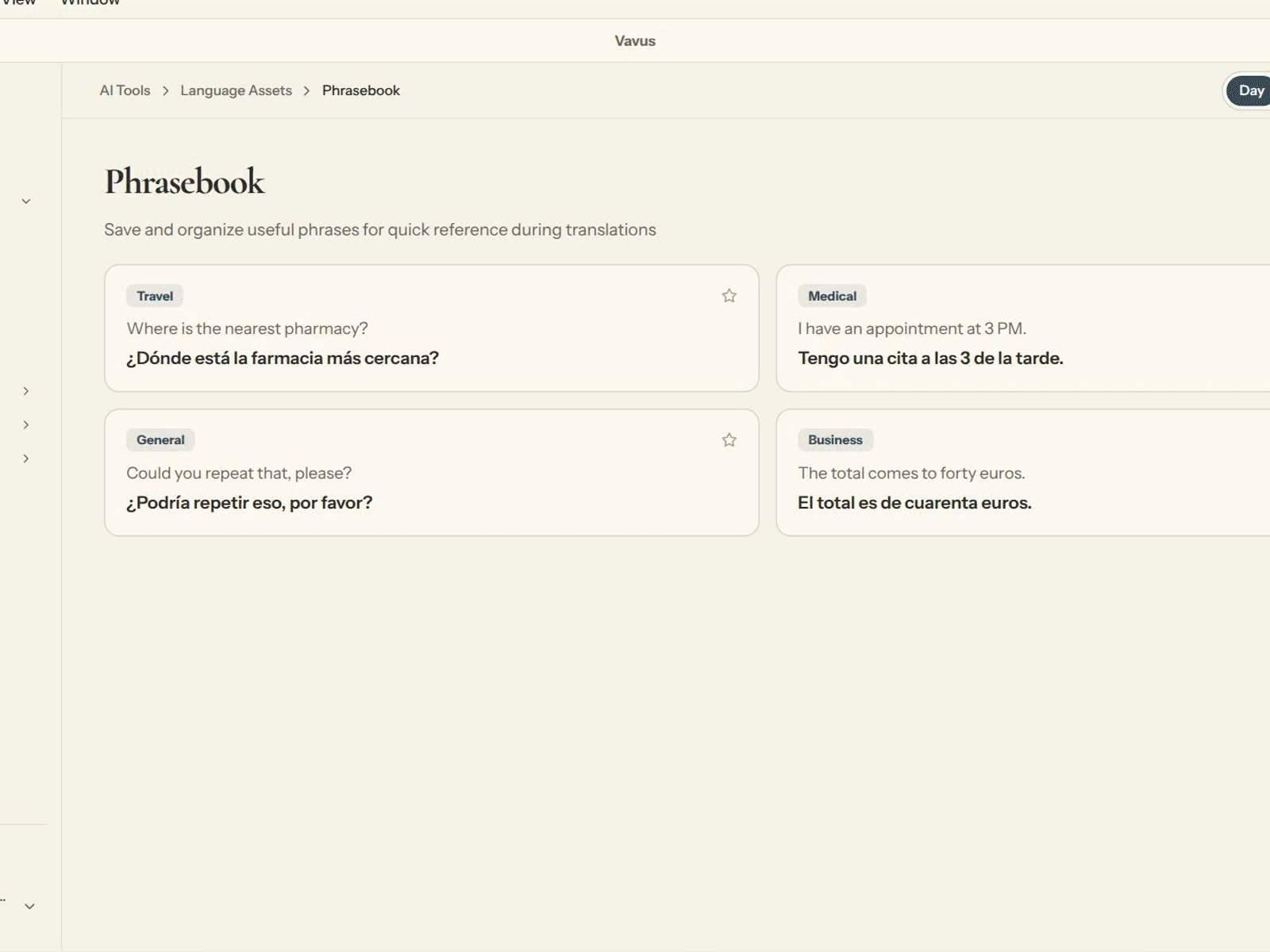
Read noteTravel translation works best when voice, keyboard, saved phrases, and message translation are available together across mobile and desktop.
Read noteLanguage work is not isolated. Translation becomes more useful when it is connected to conversations, calls, documents, files, and saved context.
Read noteOffline and cloud translation each have tradeoffs. This guide explains when local privacy, broad language coverage, speed, and quality should drive the choice.
Read noteGenerative engine optimization is about making product facts easy to find, trust, and cite. Here is how language platforms should structure content.
Read noteStandalone translators are useful for quick phrases. Vavus AI is built for workflows that connect translation with messages, calls, documents, files, and history.
Read noteMultilingual work often continues after translation. VClaw is the assistant layer for documents, OCR, files, data, code, and persistent projects.
Read noteA platform-level checklist for making Vavus pages easier for search engines, AI search systems, and buyers to understand, cite, and trust.
Read note