CallsApril 23, 2026
How conference call translation supports multilingual teams
Conference call translation needs low-latency speech input, speaker context, readable transcripts, and a reviewable record. Here is how teams should think about it.
Conference call translation needs low-latency speech input, speaker context, readable transcripts, and a reviewable record. Here is how teams should think about it.
Conference call translation is harder than phrase translation. Multiple speakers overlap, audio quality varies, accents change, and people use names, acronyms, and domain terms that generic translation may miss.
A useful call translation workflow needs more than a live caption. It needs readable transcripts, language pairs, speaker context, confidence about what was captured, and a way to review or summarize what happened after the call.
Streaming speech input: Captures speech while the meeting is happening.
Language routing: Chooses the right transcription and translation path.
Translation: Converts meaning into the target language with the right speed and context.
History: Keeps a reviewable record when the workflow allows storage.
Controls: Enterprise and healthcare scenarios need approved data paths and role-based access.
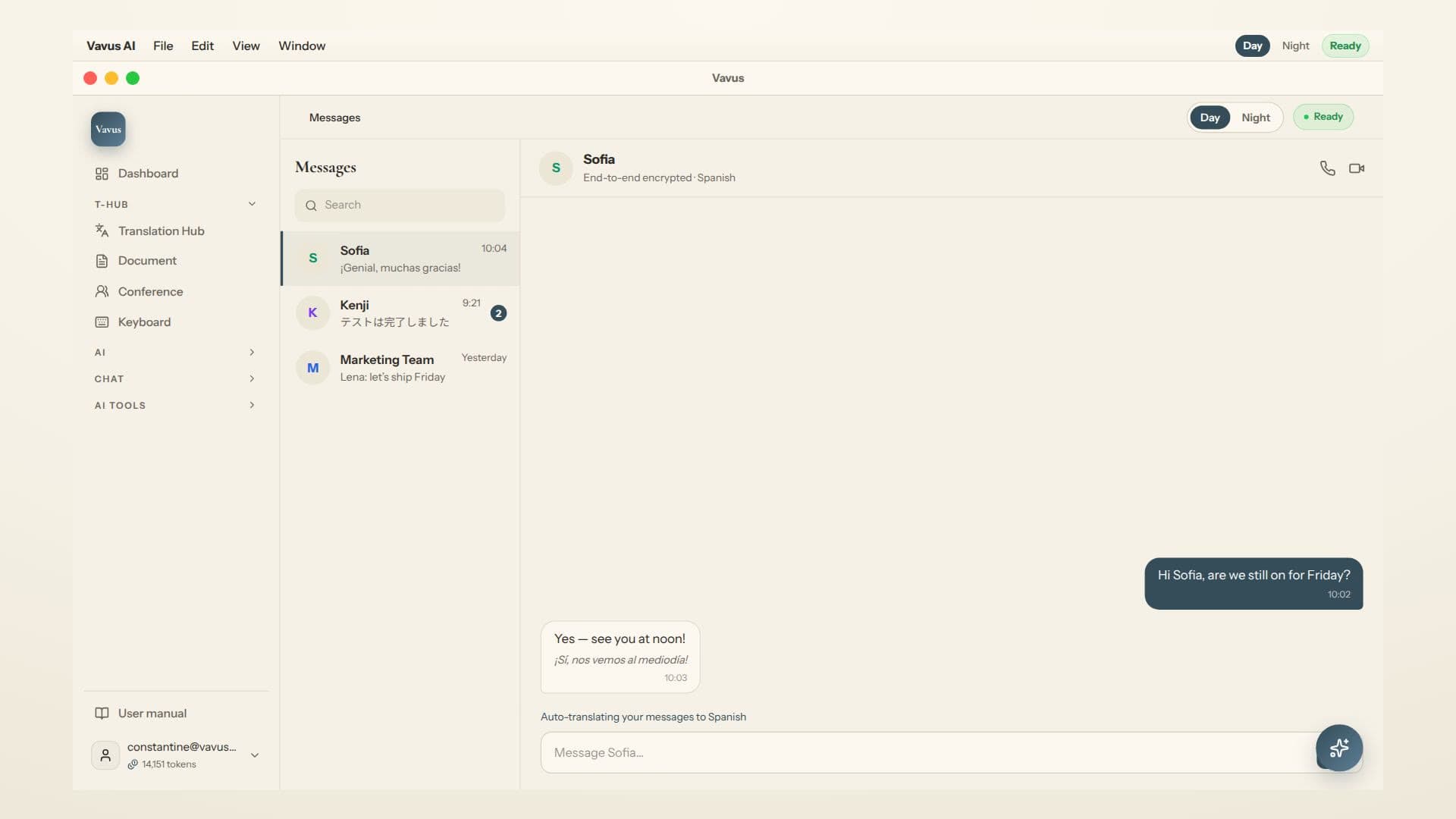
Vavus AI includes messaging, calls, conference rooms, conversation history, translation modes, files, and account tools. That gives multilingual calls a place to live beside the rest of the communication workflow.
For teams, the value is continuity. A call can become a transcript, a summary, a task list, a translated follow-up, or a document reviewed later, all under the same account controls.
Conference translation should be honest about latency and review. It should show when text is partial, make language pair changes easy, and avoid pretending that noisy audio is perfect.
No. Call translation can support communication, but professional interpretation may still be required for regulated, legal, medical, or high-stakes settings.
Not necessarily. Storage depends on account settings, compliance requirements, and the approved data path.
Because meetings create follow-up work. Without history, translated calls disappear as soon as the call ends.