You know the draft. Maybe it is the apology to a friend after you bailed on dinner twice in a month, and every version sounds either too casual ("sorry, got caught up, lol") or too much like a hostage note ("I sincerely apologize for the inconvenience this has caused"). Maybe it is the ask to your boss for a schedule change, buried under "sorry to bother you" and "no worries if not" until the actual question shows up in the third paragraph. Maybe it is the complaint to a landlord about heat that has been out for four days — rewritten once because it sounded too angry, then again because it sounded too apologetic for asking at all.
Whatever the message, the pattern is the same: type it, read it back, wince, delete a line, retype it — and by the fifth pass you are not editing for clarity anymore, you are just anxious. The facts have not changed across six phrasings and none of them feel right, because the problem was never the facts. It was the tone, and tone is the hardest thing to check by staring at your own words.
Why tone goes wrong in text specifically
In person, tone rides on things you never consciously think about — pitch, pacing, a small pause before the hard part, a half-smile that says you are not actually mad. None of that survives being typed into a message box. All that is left is the words, and words alone are a thinner signal than most people realize while writing them.
There is a well-known finding in communication research that explains why this trips people up so consistently: writers tend to hear their own intended tone in their head as they type, which makes it feel obvious to them — even though the reader never gets access to that soundtrack. Researchers Justin Kruger and Nicholas Epley, studying email communication, found that senders routinely overestimate how accurately readers can pick up their intended tone, including something as tone-dependent as sarcasm, because the writer is anchored to what they meant rather than to what is on the page. A message that feels obviously warm to the person who wrote it can land as flat, curt, or accusing to the person reading it — especially if that person is stressed or already on edge when they open it.
That is why rereading your own draft is a weak tool for catching a tone problem: you already know what you meant, so it always sounds fine to you.
A checklist that actually works, no app required
-Shorten the sentences. Qualifiers are where tone gets muddy. Say the thing, then stop.
-Pick one ask, not three. A message with three requests buried in it reads as pushy — the reader cannot tell which one actually matters.
-Cut the hedges. "Sorry to bother you but," "this might be a dumb question" — these feel polite while you are writing them, but read as insincere padding once the reader has seen the pattern a hundred times. State the ask plainly and let your actual tone carry the politeness.
-Read it out loud before you send it. The single best free tool there is. Tone that looks fine on the screen often sounds sharp the moment you hear it in your own voice.
That handles most drafts. The harder cases are the ones you have reread so many times you genuinely cannot tell anymore whether they are fine or terrible.
Where AI cleanup actually fits in
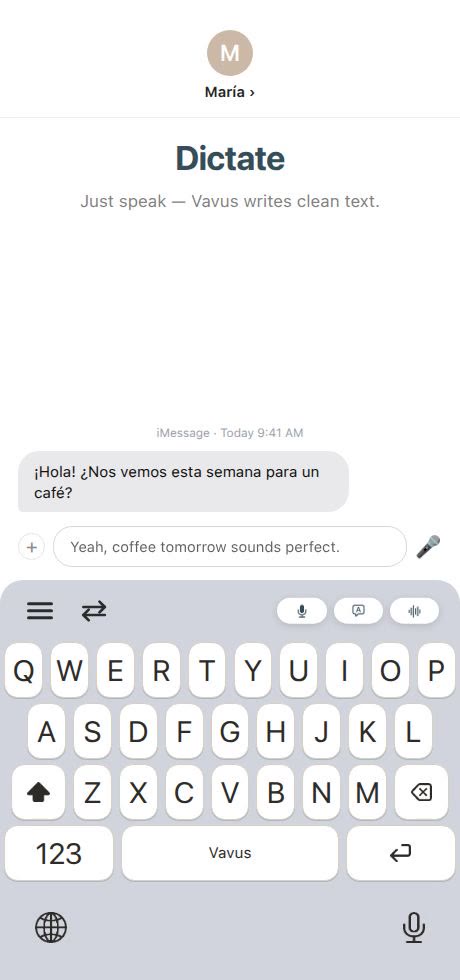
This is where Vavus Keyboard's rewrite and tone tools are useful, and it matters to be precise about what they do. They take the message you already wrote and adjust how it sounds — tighter, warmer, more direct, less blunt — without changing what you are actually saying or adding claims that were not already there. It is not a ghostwriter: it does not invent a more diplomatic version of events, and it will not turn a real complaint into a fake compliment. It rewrites your words for delivery, not your intent — you stay the author.
The apology still needs to say you are sorry you bailed twice; the tool just helps it land as an apology instead of an excuse. The ask to your boss still needs to say what schedule change you want; cleanup strips out the hedging so the question is not buried on line four.
The second-language problem underneath the tone problem
For anyone writing in a language that is not their first, there is a second layer under the tone problem: the grammar and phrasing can be a little off in ways that read as brusque even when the intent is fine. A slightly-wrong sentence does not usually read as "still learning" to a stranger — it reads as curt, on top of whatever tone issue was already there. Cleanup tools that fix phrasing and grammar at the same time as tone do double duty: the message stops failing on basic clarity and stops sounding harsher than intended, in one pass.
Frequently asked questions
How do I clean up a text message before sending it so it does not sound harsh?
Start with the manual checklist: shorten your sentences, state one clear ask instead of three, cut hedging phrases like "sorry to bother you," and read it out loud before sending. If it still feels off, run it through Vavus Keyboard's rewrite tool, which adjusts tone without changing what you are saying.
Does AI message cleanup change what I am actually saying?
No — that is the whole point. Vavus Keyboard rewrites for delivery, not content: same facts, same ask, same intent, cleaner tone. It does not add claims you did not make. If you did not say it, the tool will not put it in your message.
Why does the same message sound different to me than it does to the person reading it?
Because you already know the tone you meant, so your own draft always sounds fine to you. Text strips out the voice, pacing, and expression that normally carry tone in person, and research on email communication has found senders consistently overestimate how clearly their intended tone comes through to a reader who does not have that context.
Is this useful if the language I am writing in is not my first language?
Especially then — cleanup tools fix grammar and phrasing at the same time as tone, so a message does not read as curt just because a sentence came out slightly off. One pass covers both wording and delivery.
Rewriting the same message five times is not really an editing problem, it is a tone problem — and tone is nearly impossible to judge accurately in your own writing. Run the plain checklist first: short sentences, one ask, no hedging, read it aloud. When that is not enough, or when you are writing in a language that still trips you up on the details, AI cleanup handles the rest — adjusting how your message sounds without changing what it says. Try it at vavusai.com.