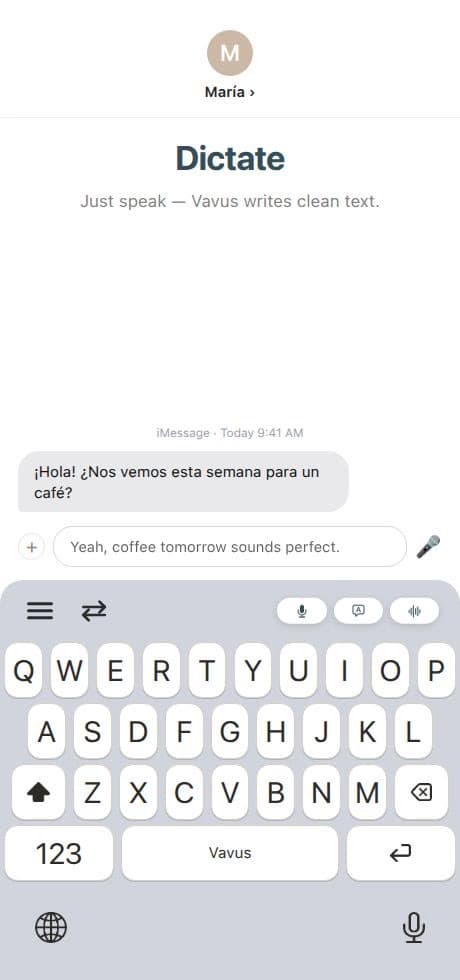
Senden Sie Kommunikationsmodi, Sprachen, Datengrenzen und Compliance-Anforderungen. Wir ordnen Vavus AI ehrlich zu. Desktop - Vavus Keyboard.
Wichtige Grenzen
Desktop - Vavus Keyboard. Teams, die Übersetzung, Stimme, Anrufe, Nachrichten, Tastatur, Dokumente und Kontrollen an einem Ort brauchen. Clientseitige Verschlüsselung, Audit-Logs, Datenexport, SAML 2.0 SSO, unterzeichnete HIPAA BAA und lokale/selbst gehostete Bereitstellung unterstützen Einkauf und Sicherheit.
Wie Vavus AI bei der Arbeit genutzt wird
Vavus Keyboard ersetzt die Telefon- oder Desktop-Tastatur und bringt Sprachfunktionen in jedes Textfeld auf dem Gerät: per Stimme diktieren, Geschriebenes inline übersetzen, per Rückübersetzung eine Nachricht vor dem Senden prüfen und die integrierte AI um Umschreiben oder Antworten bitten. Auf dem Desktop funktioniert es aus jeder App mit Ctrl+D, Ctrl+T und Ctrl+R; außerdem enthält es 50+ native Layouts, damit Sie in jeder Schrift schreiben können. Ob WhatsApp, E-Mail, Notizen oder Browser, die Tastatur begleitet Sie.
-Übersetzungssprachen: Eine Systemtastatur für Diktat, Übersetzung, Rückübersetzung, AI-Antworten und 50+ Layouts.
-Stimmsprachen: Tippen oder fügen Sie beliebigen Text ein - eine E-Mail, eine Supportantwort oder einen Absatz von einer Website -, wählen Sie die Sprache, und Text Translation liefert die übersetzte Version zum Kopieren, Speichern oder Senden. Kein Mikrofon und kein Datei-Upload; der schnellste Weg für geschriebene Wörter, auch aus der Zwischenablage.
Wichtige Grenzen
-Übersetzungssprachen: Übersetzung deckt 200+ Sprachen ab; Stimme deckt 100+ Sprachen ab.
-Stimmsprachen: Das Team wählt den Modus, setzt die Datengrenze und prüft kritische Ergebnisse vor der Nutzung.
-Enterprise-Kontrollen: Clientseitige Verschlüsselung, Audit-Logs, Datenexport, SAML 2.0 SSO, unterzeichnete HIPAA BAA und lokale/selbst gehostete Bereitstellung unterstützen Einkauf und Sicherheit.
-Offline-Textübersetzung auf dem Gerät: Offline bedeutet Textübersetzung in der Vavus AI App.
-Käufer: Gesundheitswesen, Recht, Finanzen, Versicherung, Behörden, Support, Contact Center und globale Teams.
Wo es passt
Das Team wählt den Modus, setzt die Datengrenze und prüft kritische Ergebnisse vor der Nutzung.
Prüfen Sie Unternehmenssoftware für Übersetzung und Diktat vor dem Rollout.
Teams, die Übersetzung, Stimme, Anrufe, Nachrichten, Tastatur, Dokumente und Kontrollen an einem Ort brauchen.
Wichtige Grenzen
Was deckt dieser Leitfaden ab?
Er erklärt, wie Vavus AI zu Unternehmenssoftware für Übersetzung und Diktat passt, mit Textübersetzung, Stimme, Anrufen, Nachrichten, Tastatur, Dokumenten und Enterprise-Kontrollen.
Funktioniert Vavus AI offline?
Ja, aber offline bedeutet Textübersetzung in der Vavus AI App. Stimme, Anrufe und Tastatur brauchen Verbindung, außer bei genehmigter lokaler Bereitstellung.
Welche Enterprise-Kontrollen gibt es?
Clientseitige Verschlüsselung, Audit-Logs, Datenexport, SAML 2.0 SSO, unterzeichnete HIPAA BAA und lokale/selbst gehostete Bereitstellung.