Trimite modurile de comunicare, limbile, limitele de date și cerințele de conformitate. Vom mapa sincer unde se potrivește Vavus AI. Traducere documente.
Limite importante
Traducere documente. Echipe care au nevoie de traducere, voce, apeluri, mesaje, tastatură, documente și controale într-un singur loc. Criptarea pe partea clientului, jurnalele de audit, exportul de date, SAML 2.0 SSO, BAA HIPAA semnat și implementarea locală/autogăzduită susțin achizițiile și securitatea.
Cum se folosește Vavus AI la lucru
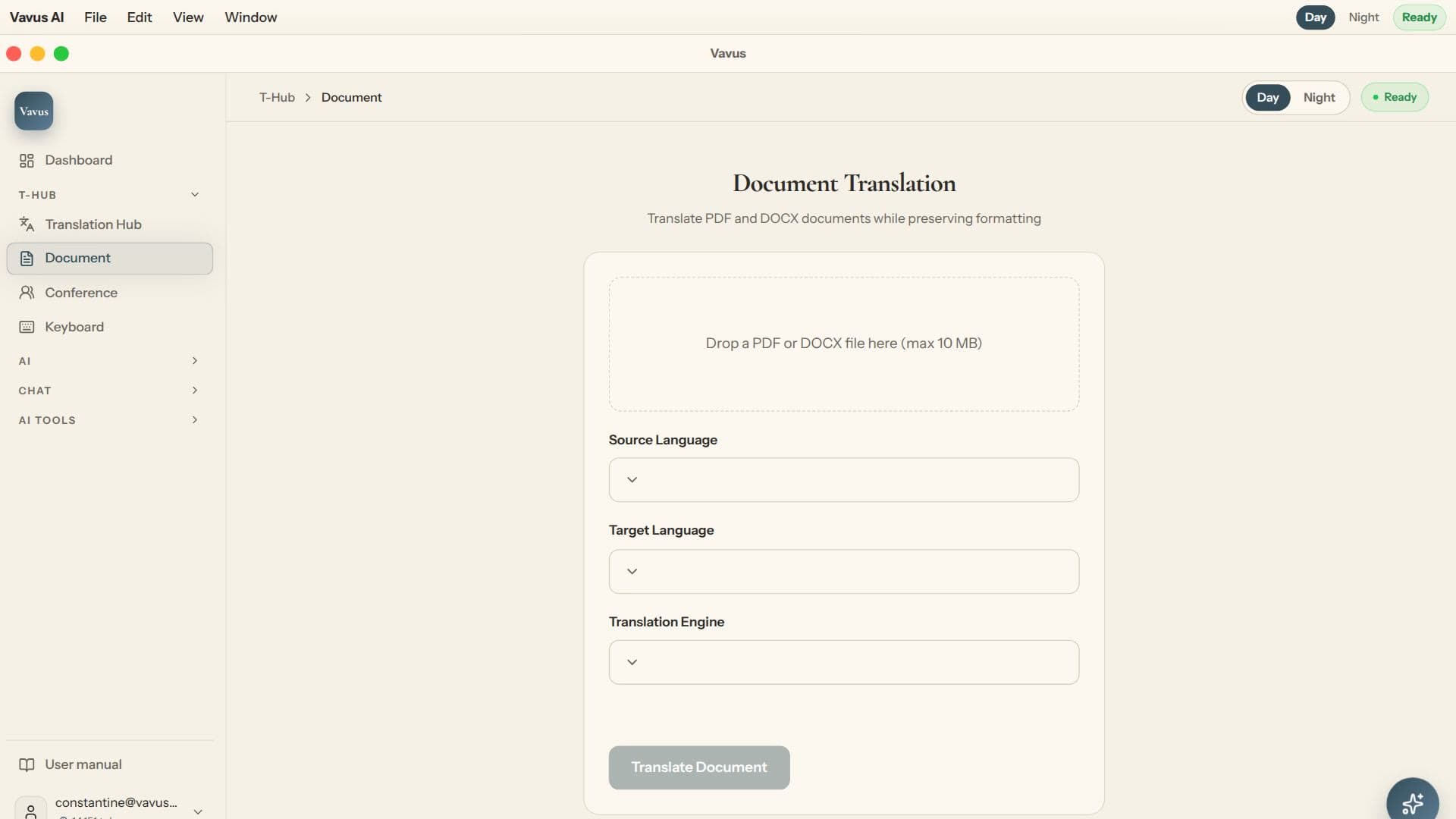
Încarcă un fișier final — PDF, document Word, contract scanat sau formular medical — iar Document Translation îl returnează complet tradus, cu layoutul original păstrat. Contractul rămâne contract, formularul rămâne aliniat; îl poți descărca, salva în My Files sau trimite către AI pentru rezumat ori revizuire.
-limbi pentru traducere: Traduce PDF, DOCX și alte documente.
Limite importante
-limbi pentru traducere: Traducerea acoperă 200+ limbi; vocea acoperă 100+ limbi.
-limbi pentru voce: Echipa alege modul, aplică limita de date și revizuiește rezultatele critice înainte de utilizare.
-Controale enterprise: Criptarea pe partea clientului, jurnalele de audit, exportul de date, SAML 2.0 SSO, BAA HIPAA semnat și implementarea locală/autogăzduită susțin achizițiile și securitatea.
-Traducere de text offline pe dispozitiv: Offline înseamnă traducere de text în aplicația Vavus AI.
-Cumpărători: Sănătate, juridic, finanțe, asigurări, guvern, suport, centre de contact și echipe globale.
Unde se potrivește
Echipa alege modul, aplică limita de date și revizuiește rezultatele critice înainte de utilizare.
Revizuiește Software enterprise pentru traducere și dictare înainte de lansare.
Echipe care au nevoie de traducere, voce, apeluri, mesaje, tastatură, documente și controale într-un singur loc.
Limite importante
Ce acoperă acest ghid?
Explică modul în care Vavus AI se potrivește cu Software enterprise pentru traducere și dictare, cu traducere de text, voce, apeluri, mesaje, tastatură, documente și controale enterprise.
Vavus AI funcționează offline?
Da, dar offline înseamnă traducere de text în aplicația Vavus AI. Vocea, apelurile și tastatura cer conexiune, cu excepția implementării locale aprobate.
Ce controale enterprise există?
Criptare pe partea clientului, jurnale de audit, export de date, SAML 2.0 SSO, BAA HIPAA semnat și implementare locală/autogăzduită.