A grandmother in Manila. A grandson in Los Angeles. They love each other completely — and on the weekly video call they mostly wave, hold up the baby, and wait for a parent to relay a few sentences before the connection drops. The warmth is real. The conversation never quite happens.
This is one of the most common forms of distance there is, and it is not about miles. About 67.8 million people in the United States — roughly one in five — speak a language other than English at home (U.S. Census Bureau, 2019). Within a single family, the generations often do not share a fluent language: the elders keep the mother tongue, the children grow up in the language around them, and research on immigrant families is consistent that by the third generation the heritage language has largely faded (Pew Research Center). Grandparents and grandchildren end up on opposite sides of a gap nobody chose.
The usual workarounds are thin. A parent translates in the middle — until they are tired, or busy, or gone. Everyone sticks to the few phrases they share. Or the calls just get shorter, and then rarer, because it is hard to keep showing up for a conversation you cannot really have.
The fix: let each person speak their own language
You do not need anyone in the family to become bilingual for this. You need the call itself to carry both languages.
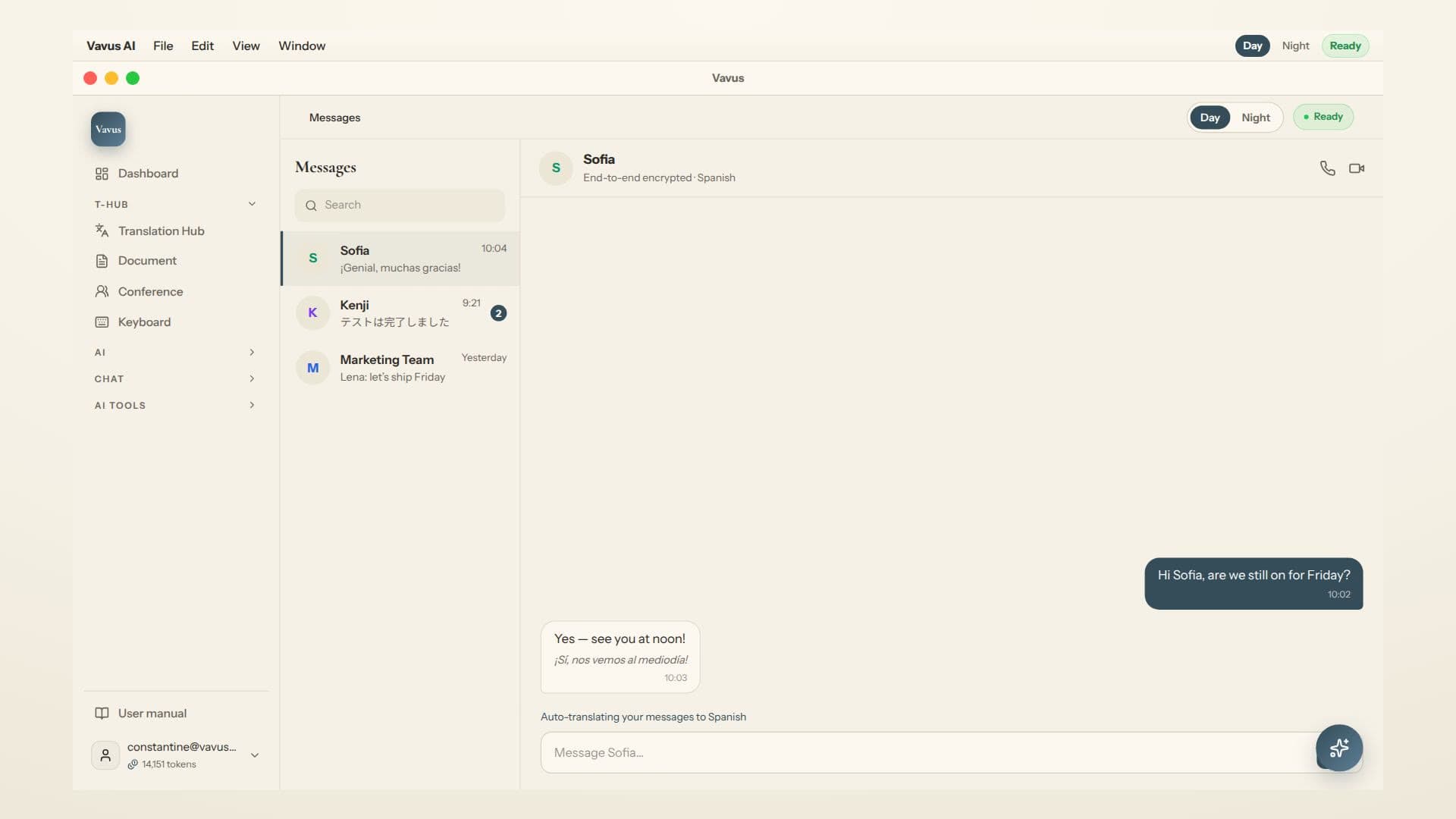
-Live call translation: on a Vavus AI call, each person speaks their own language and hears the other's translated in real time — one speaks Tagalog, the other hears English, and back again. The conversation flows without a relay in the middle.
-Texts in between: with Vavus Keyboard, a grandchild types in English and it arrives in Spanish, or Tagalog, or Ukrainian; the reply comes back in the grandchild's language. The little check-ins between calls finally work both ways.
-Read what they send: a voice note or a message in a language you do not read? Drop it in and understand it — no guessing, no waiting for someone to translate it for you.
-Works on their device: on a phone for the elders who live on video calls, on desktop for the family that video-chats from a laptop. One Vavus account covers everyone.
The point is not perfect, literary translation. It is that a seven-year-old and an eighty-year-old can tell each other about their day — directly — instead of through a tired go-between.
Where this earns its keep
-Grandparents and grandchildren: the weekly call becomes an actual back-and-forth, not a wave and a handoff.
-In-laws you cannot talk to yet: the family you married into, finally reachable without your partner interpreting every sentence.
-Elders keeping their language: nobody has to abandon their mother tongue for the family to stay close.
-The everyday texts: birthdays, photos, "did you eat?" — the small messages that are the actual glue of a family.
Be honest about what it is — and is not
Machine translation is not a human interpreter, and it is not trying to be. For a binding, high-stakes moment — a doctor delivering a diagnosis, a lawyer explaining a document — you still want a certified interpreter. But that was never the setting here. This is for Sunday calls, birthday messages, and "goodnight, I love you" across an ocean — the everyday closeness where hiring an interpreter was never on the table, and where, until now, families just quietly drifted.
What it costs
Vavus AI starts at $9.97/month on web ($9.99 on Apple) for the Personal plan, or pay-as-you-go with tokens. For staying in real contact with the people who raised you — or the grandchildren you are watching grow up from far away — it is a small price against the alternative of slowly losing the words between you.
Frequently asked questions
How can I talk to a grandparent who speaks a different language?
Start a Vavus AI call and set each person's language. You speak yours, they hear theirs, and their reply comes back translated in real time — so you can have an actual conversation instead of relying on someone in the middle to relay it.
Can it translate a video call in real time?
Yes — it translates the speech on the call as it happens, in both directions, so each person talks and listens in their own language.
What about the texts between calls?
Vavus Keyboard translates as you type: write in your language and it sends in theirs, and you can translate what they send back. It works in your normal messaging apps, under the same Vavus account.
Is it as good as a family member translating?
For the everyday — calls, texts, check-ins — it is better, because it is always available and it lets people talk directly instead of through a go-between. For anything binding or high-stakes, use a certified human interpreter.
The bottom line: a shared language was never the thing that made you family — but losing the words can quietly cost you the closeness. Live translated calls and everyday translated texts hand that closeness back: each person in their own language, talking directly, no relay required. Try it at vavusai.com.