EnterpriseJune 13, 2026
The best way for enterprises to become more productive
Enterprise productivity improves most when you remove friction between people, languages, and tools — not when you add more software. Here is the practical pattern.
Enterprise productivity improves most when you remove friction between people, languages, and tools — not when you add more software. Here is the practical pattern.
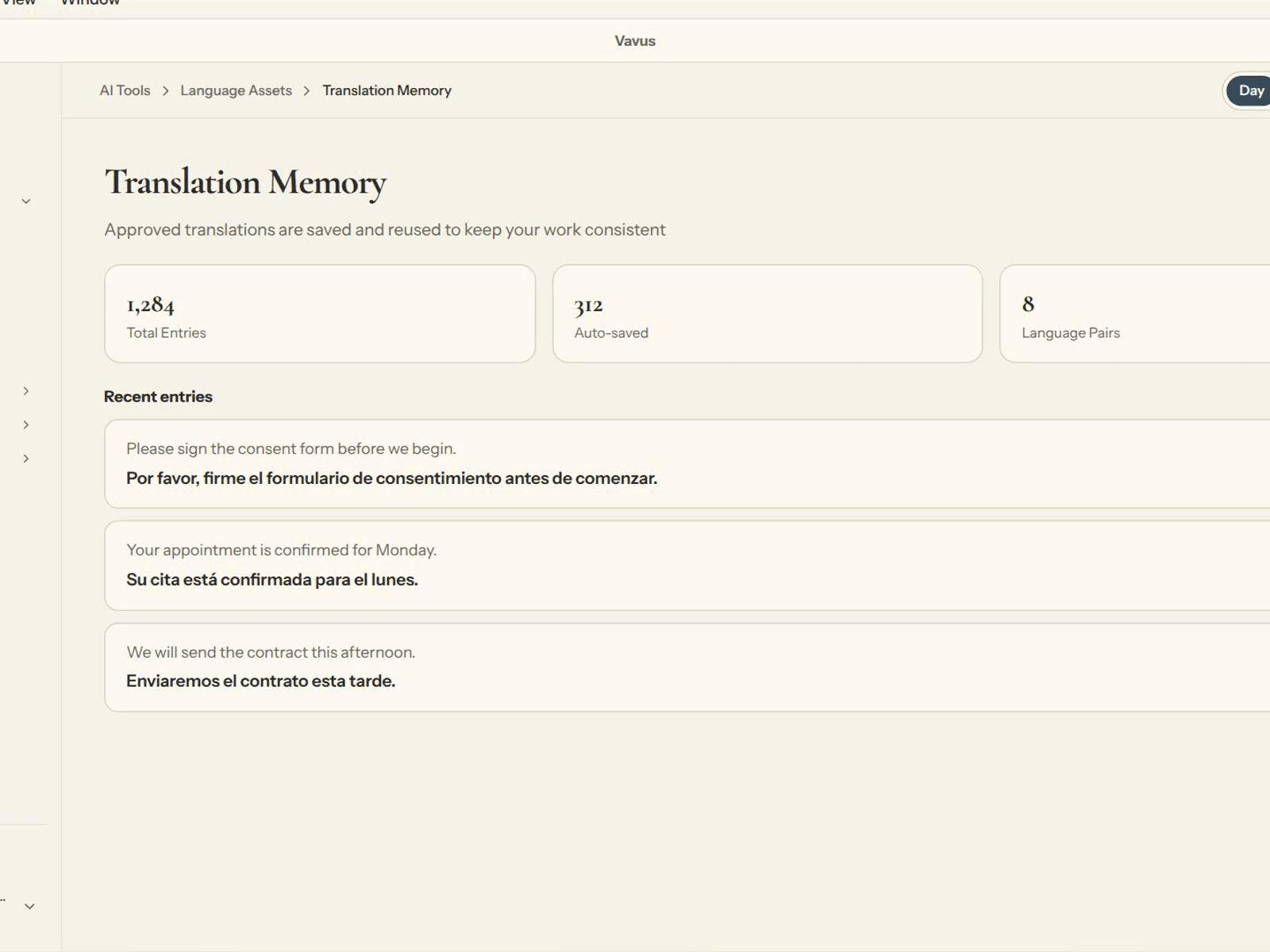
The best way for enterprises to become more productive is not to add more tools — it is to remove the friction between the tools, the languages, and the people already doing the work. Most large teams lose time in the gaps: switching apps, rewriting the same message in another language, waiting on a specialist for a task software could handle, and rebuilding context every time work moves between systems. Productivity improves fastest when those gaps close.
The pattern is consistent across departments. The slow part is rarely the actual thinking. It is the manual movement around it.
A support agent knows the answer but spends time translating it. A clinician knows the intake question but waits on an interpreter. An operations lead knows what report they need but waits on an analyst to pull it. In each case the person is capable — the workflow makes them slow.
Enterprises tend to respond by buying another platform. But every new platform adds another app to switch into, another login, another place where context is rebuilt. The compounding cost is invisible on any single task and enormous across thousands of them per day.
For any enterprise with multilingual customers, staff, or suppliers, language is the highest-volume friction there is. It touches support, sales, healthcare intake, HR, logistics, and field operations — all day, every day.
The fix is to put translation and dictation **where the work already happens**, not in a separate tab:
Translate in place: Reply to a customer in their language without leaving the support queue, CRM, or message thread.
Dictate first drafts: Speak longer notes, summaries, and replies instead of typing them.
Reverse translate: Let staff think in their strongest language and send in the one the recipient expects.
Keep it consistent across devices: Desktop hotkeys for long sessions, a mobile keyboard for work in the field, one shared account behind both.
When language stops being a separate step, multilingual work moves at the speed of monolingual work. That is the single largest productivity unlock available to most global teams.
The second pattern is delegating repeatable work to AI assistants instead of routing it to a specialist queue. Document processing, data pulls, OCR, summarization, and routine analysis do not need to wait for an analyst's calendar.
The key is that these assistants belong to the person doing the work — set up with the team's own context and, where needed, their own keys — so the output is usable immediately rather than handed off and re-explained. The goal is not to replace experts. It is to stop sending experts work that software should already handle, so their time goes to judgment instead of fetching.
Enterprise productivity tools only get adopted if they clear security and compliance review. That means client-side encryption for sensitive data, audit logging, no personal data sitting in logs, and clear retention rules. For regulated teams — healthcare, finance, legal — features like HIPAA-aligned handling and short token lifetimes are not extras; they are the precondition for using the tool at all.
A productivity gain that fails the compliance review delivers zero productivity. Build the secure path first and adoption follows.
Pick one high-volume workflow — a translated support reply, a bilingual intake note, a routine report — and count the steps before and after. Measure switching, copying, waiting, and rewriting, not just the core task. The best setup is almost always the one that removes the most manual movement around the work, and the savings compound because the same workflow repeats thousands of times.
Removing language friction. It is the highest-frequency interruption across support, sales, and operations, so closing it returns time on nearly every interaction.
No. The aim is to stop routing routine, repeatable work to specialists so their time goes to judgment. Capable people get faster; they are not replaced.
Because a tool that fails compliance review never gets deployed. Client-side encryption, audit logging, and clear retention are what let regulated teams actually adopt the productivity gain.
We use first-party cookies and local storage to run this site. You choose which categories to allow. Strictly necessary cookies are always active. See our Privacy Policy for details.