UpdateOctober 7, 2026
Translate a supplier sample request with clear checks
A fictional small-business example shows how to translate a supplier sample enquiry, check quantities and dates, and clarify replies before making a commitment.
A fictional small-business example shows how to translate a supplier sample enquiry, check quantities and dates, and clarify replies before making a commitment.
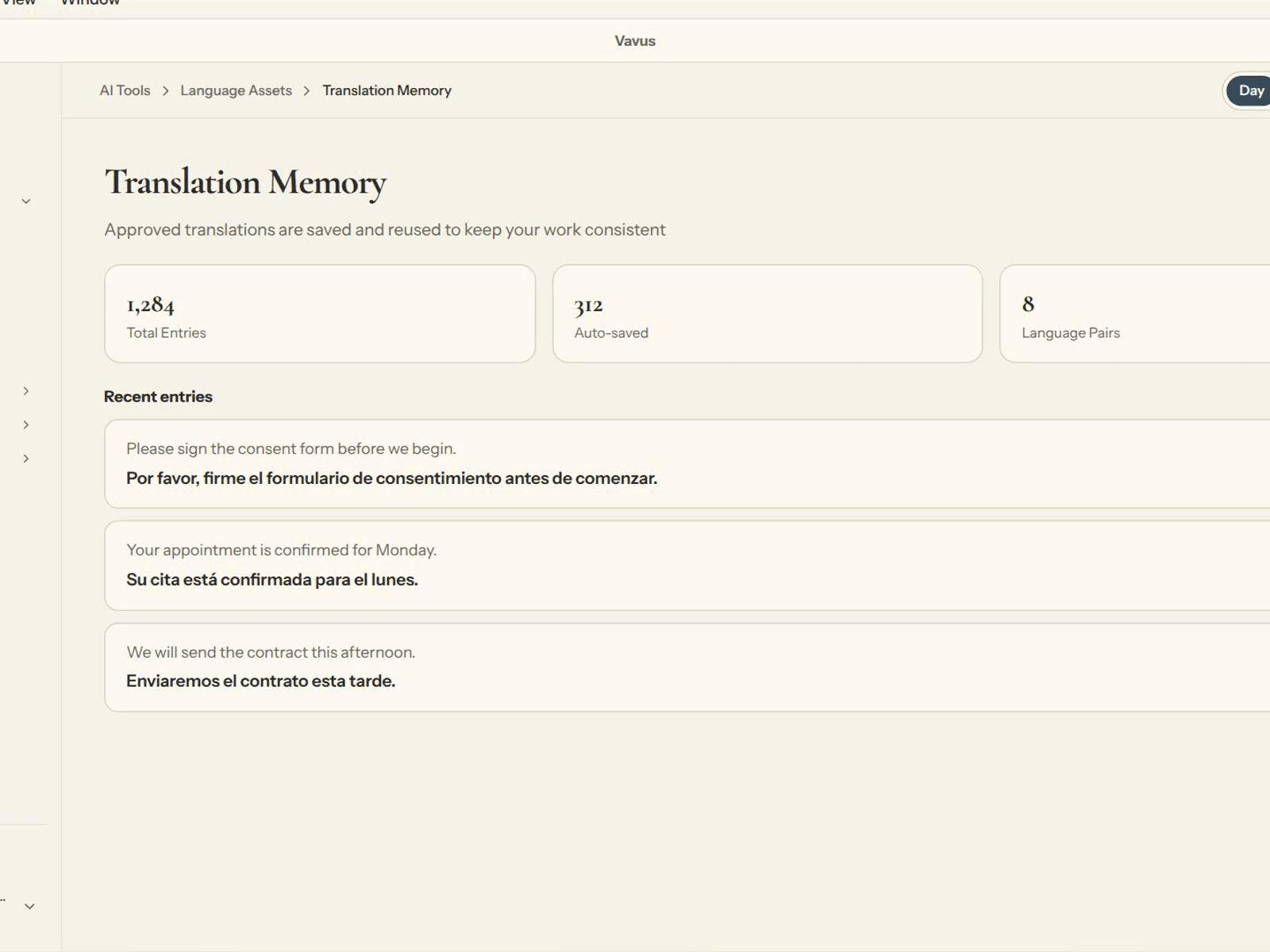
Fictional example: Mara, Luis, their businesses, and this sample request are invented. This is a proposed workflow, not a customer story or a report of measured results. Product details come from Vavus’s public pages reviewed on 7 October 2026. We did not test this exchange in the app.
Mara runs a small homeware shop. She wants to ask a Portuguese supplier about fabric storage pouches. Luis handles the supplier’s enquiries in Portuguese. Mara writes in English. Before either person discusses a purchase, they need to agree on what a sample request means.
The difficult words may look simple: size, sample, ready, and send. Each can hide a different assumption. Here is how Mara could use translation for this routine enquiry while keeping the product details and decisions under human control.
Mara first writes the facts in a short note. She needs twelve sample pouches. The product code is NAV-04. She wants the supplier to confirm the finished dimensions. She is asking for information, and has not authorised production.
Her first draft says, “Can you do a dozen of the usual size and get them out next Friday?” That draft leaves too much work to the reader. “Usual” has no shared reference. “Get them out” could mean finish making them or hand them to a carrier.
A clearer source message would be: “Please confirm whether you can supply 12 sample pouches, product code NAV-04. Please state the finished width and height in centimetres. Please confirm the date when the samples would leave your workshop. This message is an enquiry. Please do not start production.”
This preparation belongs to Mara. A translation tool should not have to invent a size, infer a deadline, or decide whether she has placed an order.
Vavus Keyboard’s product page describes translating written or copied text, translating replies, and checking a translation in reverse. It describes a mobile keyboard and desktop shortcuts. On iPhone, the destination app must accept third-party keyboards. 1
Mara could choose English as the source language and Portuguese as the target, then translate her draft in a supported text field. Before using business information, she would check that the tool and its data handling meet her business’s requirements. This enquiry does not need customer names, home addresses, payment details, or a full supplier contract.
She would keep the English source beside the proposed translation. That gives a reviewer a stable reference. If she changes the quantity later, she should update the source and produce a new translation.
Mara would compare the code NAV-04 and the quantity 12 character by character. She would check that centimetres remain the stated unit. She would also look for the instruction that production must not start.
Reverse translation can be one check for an obvious change in meaning. It cannot prove that the Portuguese is correct. The same unclear wording can survive translation in both directions. If the message will create a cost or commitment, a competent bilingual reviewer should check it before Mara sends it.
For this hypothetical workflow, Mara would manually review and send the message. No automatic sending, supplier-system connection, or purchase-order feature is assumed.
Suppose Luis replies that the samples can be “ready” on 16 October 2026. This is invented wording for the example. Mara should not treat it as a confirmed dispatch date.
Her next source message could be: “Does 16 October 2026 mean the samples will be finished, or that the carrier will collect them? Please confirm the dispatch date.” Writing the month in full also gives both people a clear date to check.
Suppose the reply gives dimensions but does not say whether they describe the fabric before sewing or the finished pouch. Mara would ask that question directly. Better source questions reduce the number of assumptions that a translation must carry.
Once the details are clear, Mara would keep a short summary in her own records: product code, sample quantity, finished dimensions, and confirmed dispatch date. She would mark unanswered questions as open. This is a manual record, not a claimed Vavus feature.
Any quote, payment, or production approval would remain a separate business decision. This fictional example does not end with a sale or a claimed time saving. Its useful outcome is a method: write specific source text, check fixed facts, clarify ambiguous replies, and review before committing.
Explore Vavus Keyboard and check the setup for your device